Journal
From Mountain to Jar: How We Make Our Himalayan Shilajit
From the high Himalayas to the jar, our shilajit follows a careful journey rooted in traditional knowledge. Collected at elevations above 3,500 metres, the raw material is gradually purified, filtered, concentrated, and refined at our facility before undergoing quality checks. Discover the process behind our Himalayan Shilajit — crafted by time, refined by tradition.

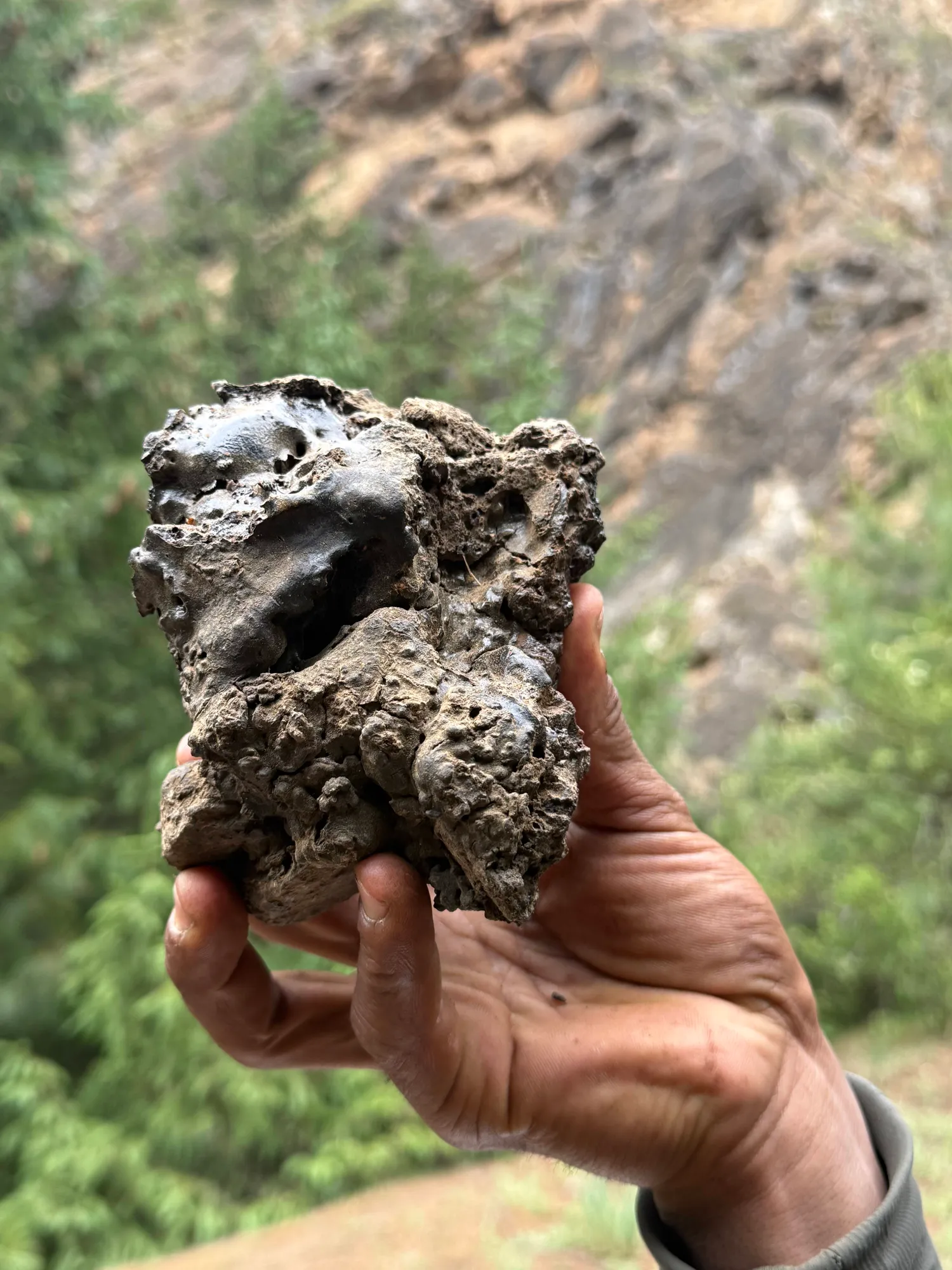
Our journey begins at elevations above 3,500 metres, in the remote Himalayan terrain of Nepal.
Shilajit is traditionally found within rocky mountain formations, where it gradually emerges from cracks and crevices in the rock. Collection in these areas requires experience, patience, and knowledge of the terrain.
Our collectors carefully gather the raw material from its natural environment, bringing it down from difficult-to-access Himalayan landscapes for further processing.
Origin matters. For us, knowing where our shilajit begins is an essential part of knowing what goes into every jar.
02. The Journey to Our FacilityOnce harvested, the raw shilajit begins its journey to our processing facility.
The material is transported carefully so that it can be sorted and prepared for the next stage. What arrives at the facility is not yet the smooth, finished resin found in our jars. It is raw mountain material that still contains natural impurities and requires extensive purification.
This is where the mountain journey becomes a carefully controlled process.
03. Ayurvedic PurificationRather than simply heating and filtering the raw material, we follow a traditional purification process inspired by Ayurvedic practices.
The raw shilajit is worked through multiple stages of processing to separate unwanted matter while retaining the naturally occurring mineral-rich resin.
Traditional ingredients used during this stage include Triphala and Bhringraj, alongside other carefully selected materials used in the purification process.
The objective is simple: to gradually transform raw Himalayan shilajit into a cleaner, refined resin while respecting traditional methods.
04. Fire, Just as It Has Been Done for GenerationsHeat plays an important role in the transformation of shilajit.
The purified extract is gradually heated under controlled conditions. This allows excess moisture to evaporate and the resin to become progressively more concentrated.
Rather than rushing this process, we allow the material to reduce gradually. With time, the liquid becomes thicker, darker, and more concentrated until it develops the characteristic consistency of shilajit resin.
Slow processing is part of the craft.
05. Filtered by HandAfter purification and concentration, the resin undergoes further filtration.
This stage helps remove remaining physical impurities and allows us to achieve a smoother, more consistent final product.
The resin is filtered carefully before it is allowed to settle. Any remaining sediment can then be separated, leaving behind a refined resin with the characteristic deep colour and texture associated with Himalayan shilajit.
It is a simple principle: what goes into the jar should be carefully considered at every stage.
06. Following Ayurvedic TraditionOur process draws from traditional Ayurvedic approaches to shilajit purification.
Ingredients such as Triphala and Bhringraj, together with other traditional components, have historically been associated with shilajit preparation.
Rather than treating tradition as a decorative story, we see it as knowledge passed down through generations — knowledge of materials, preparation, patience, and care.
Our aim is to bring this traditional understanding into a carefully managed modern production process.
07. Before It Reaches YouBefore the finished resin reaches its jar, it undergoes final checks for purity, consistency, and quality.
The finished product is carefully prepared and packaged at our facility, with attention given to cleanliness, handling, and consistency throughout the process.
For us, quality does not begin at packaging. It begins at the mountain and continues through every stage of preparation.
08. From Mountain to JarAnd finally, the journey comes full circle.
What began as a naturally occurring substance in the high Himalayas is transformed, through careful collection, traditional purification, gradual concentration, filtration, and quality control, into the Himalayan Shilajit Resin in your jar.
Behind every jar is not just a product, but a chain of places, people, knowledge, and time.
From the heights of the Himalayas to your hands — crafted by time, refined by tradition.
The Garima Organics Approach
We believe Himalayan products should be understood through their origin, process, and people.
That is why we want you to know where our shilajit comes from, how it is handled, and the care that goes into transforming raw mountain material into the finished resin.
Mountain → Collection → Purification → Concentration → Filtration → Quality Check → Jar
Garima Organics
Rooted in Nepal. Made with care.
Keep reading